
whatsapp:8615165139199
mail:lilysun2617188@gmail.com
address:No.16, Ren Mei Road, National Hi-tech Industrial Development Zone, Jining City, Shandong Province, China.
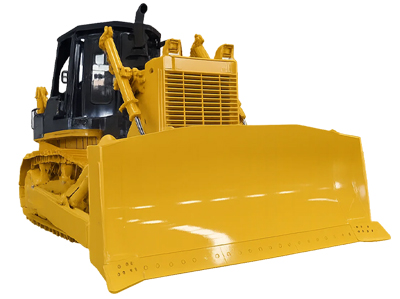
A bulldozer is a powerful piece of heavy construction equipment designed primarily for pushing, grading, and leveling materials such as soil, sand, rocks, rubble, and snow. It is widely used in construction, agriculture, mining, and infrastructure projects worldwide.
Most bulldozers are equipped with a large front-mounted metal blade and operate on continuous tracks, providing excellent traction on rough or uneven terrain. Some modern bulldozers are fitted with large off-road tires, allowing faster movement and improved maneuverability on solid ground.
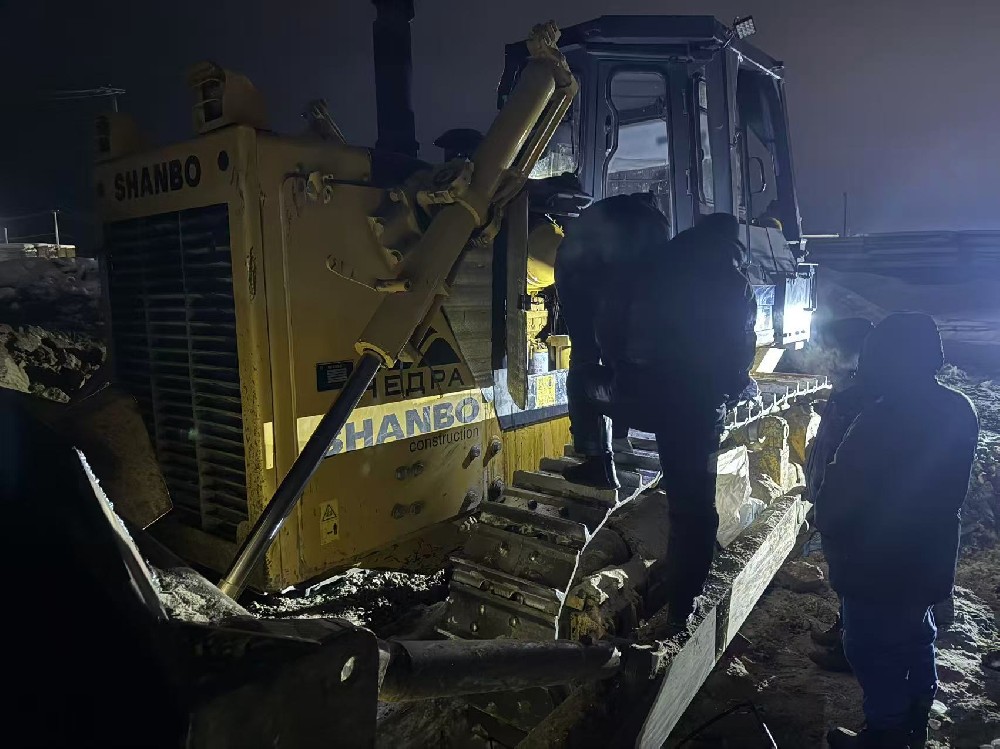
The development of the bulldozer was a gradual engineering process rather than a single invention. Its evolution combined innovations in traction systems, engine power, and blade design.
In 1904, American inventor Benjamin Holt introduced a revolutionary track system that allowed steam tractors to travel smoothly over soft and muddy terrain. Due to its crawling motion, Holt named this system "Caterpillar".
Together with James Cummings and J. Earl McLeod, Holt refined this technology, which later became the foundation for modern tracked machinery. During World War I, similar track systems were adapted for military tanks, significantly influencing the global development of heavy equipment.
Bulldozers are essential machines in large-scale earthmoving and construction operations. Their high torque, strong pushing force, and durable structure enable efficient performance in demanding environments.
🔹 1) Construction Projects: Land clearing, grading, site preparation, and foundation work.
🔹 2) Agriculture: Soil leveling, land reclamation, and field preparation.
🔹 3) Mining Operations: Moving heavy materials, clearing debris, and maintaining haul roads.
🔹 4) Road and Infrastructure Development: Building highways, rural roads, and drainage systems.
🔹 5) Maintenance and Emergency Work: Snow removal, disaster cleanup, and asphalt breaking.
Bulldozers can be categorized into three main types based on their structure and operating environment. Each type offers unique advantages for specific working conditions.
A crawler bulldozer, also known as a tracked bulldozer, uses continuous tracks instead of wheels. This design provides superior traction, stability, and ground contact, making it ideal for soft, muddy, or uneven terrain.
🔹 1) Mining and Quarrying: Efficient movement of large material volumes on rough ground.
🔹 2) Heavy Construction: Reliable operation on slopes, rocky surfaces, and unstable soil.
🔹 3) Landfill Operations: Waste compaction and debris handling in challenging conditions.
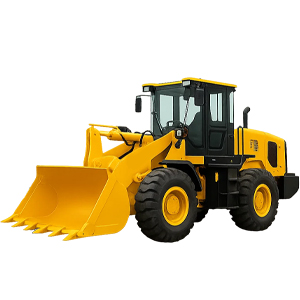
Wheeled bulldozers are equipped with large rubber tires, allowing higher travel speeds and improved maneuverability compared to tracked models. They are especially effective on firm and paved surfaces.
Due to reduced surface damage and lower operating resistance, wheeled bulldozers are commonly used where minimal ground disturbance is required.
🔹 1) Urban Construction: Road maintenance and infrastructure work in confined city spaces.
🔹 2) Landscaping Projects: Light grading and soil shaping with minimal surface impact.
🔹 3) Road Paving Preparation: Surface leveling before asphalt or concrete paving.
Mini bulldozers, also known as compact bulldozers, are smaller machines designed for projects with limited space. Despite their size, they provide sufficient power for light to medium-duty tasks.
🔹 1) Residential Construction: Yard grading, small excavation work, and property development.
🔹 2) Utility Installation: Trenching for water, gas, and electrical pipelines.
🔹 3) Landscaping and Renovation: Soil movement, debris removal, and site reshaping.
Selecting the right bulldozer depends on factors such as project size, terrain conditions, operating environment, and required blade capacity. Tracked bulldozers are recommended for heavy-duty and uneven terrain, while wheeled bulldozers offer speed and flexibility on solid ground.
Compact bulldozers are ideal for small-scale projects where maneuverability and space efficiency are critical.
Bulldozers remain one of the most important machines in construction, agriculture, and mining industries. With multiple types available and a wide range of applications, bulldozers ensure efficient earthmoving, reliable performance, and long-term productivity across diverse working conditions.